Palolo Coqui, started in Feb. 2026, is an all-volunteer effort that coordinates with Department of Agriculture and Biosecurity (DAB), Department of Forestry and Wildlife (DOFAW) and Oahu Invasive Species Counsil (OISC) to catch coqui in Palolo by hand capture, landscape remediation, citric acid spray and community education.
Click here to send an email for Informational newsletter only. Please email palolocoqui@gmail.com and give your phone number.
Help our on-going hunt to catch and eradicate invasive Coqui
Help hunt for coqui. You will need to download What’s App on your phone. Then email palolocoqui@gmail.com and give your phone number and you will be sent an invitation to join the Palolo Coqui Hunt and Landscape group. The hunt days and times are posted on this program.
Please push the button below to learn more about Coqui frogs and other invasive species from the government’s website for The State of Hawaii Department of Agriculture and Biosecurity:
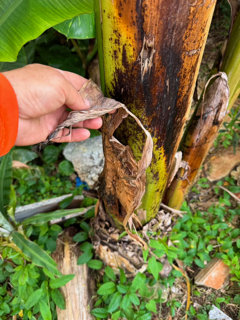
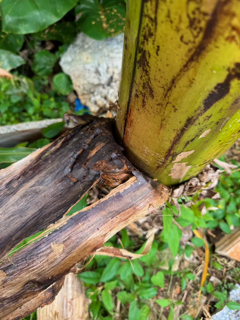
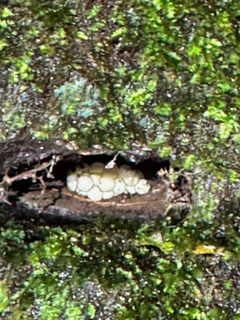
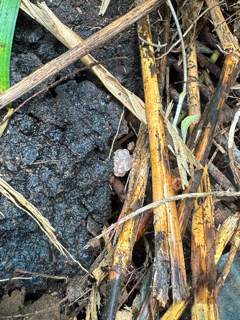
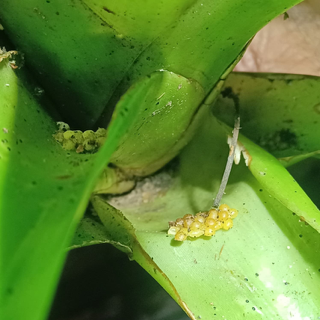
Typical places where Coqui frogs and egg clusters may be found.
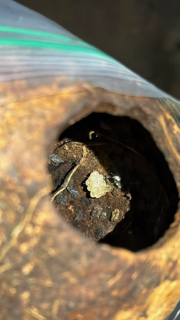
Coqui frog egg cluster Inside an old coconut.
A Coqui frog egg cluster under a chunk of asphalt.
Again, Coqui frog egg cluster under some old asphalt.

Frog egg clusters.
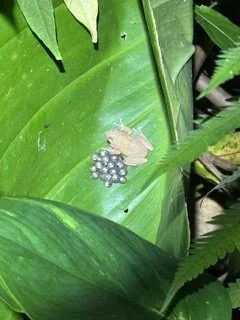
Coqui frog guarding eggs.
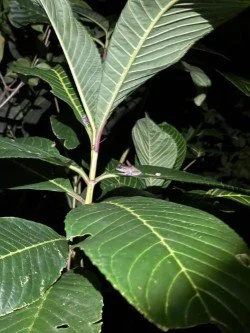
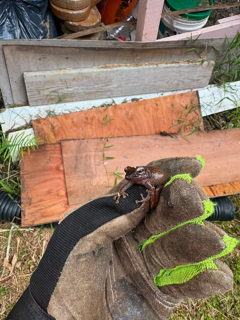
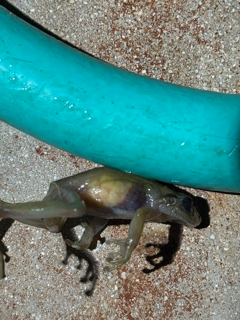
Coqui frogs.
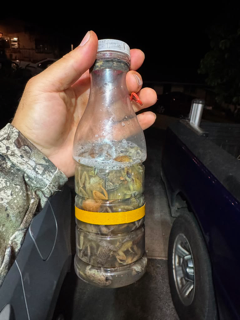
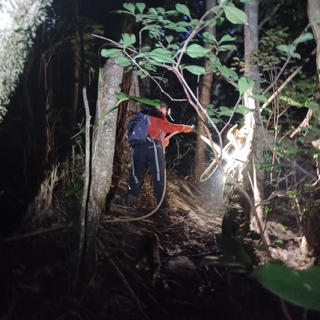
Solo hunter bags 49 Coqui frogs in one night!
Division of Forestry and Wildlife (DOFAW) and Department of Land and Natural Resources (DLNR) with 600 gallon citrus acid spray June 26. the spray is safe for the environment but lethal for Coqui frogs.
PALOLO COQUI GROUP VOLUNTEER PARTICIPANT SAFETY GUIDE
Welcome and mahalo for your help with Palolo Coqui Group. This guide outlines basic safety expectations for all participants during volunteer events, site clearing, planting, coqui removal and other outdoor or community-based work.
All participants are expected to use good judgment, follow activity organizer directions, ask questions when unsure, and help maintain a safe volunteer environment. Participants should review safety guidelines and sign all required waiver forms before participating in activities.
1. Follow Organizer Directions
· Follow all instructions provided by activity organizers, staff, event coordinators, and designated activity leaders.
· Ask questions if you are unsure how to perform a task safely or if conditions change during an activity.
· Participants who do not follow safety instructions, disregard site rules, or create unsafe conditions may be removed from activities.
· Parents, guardians, teachers, or supervising adults accompanying minors are expected to help ensure that minors follow safety instructions and remain appropriately supervised during activities.
2. Come Prepared and Use Required Protective Gear
· Wear closed-toe shoes, sturdy footwear, or work boots appropriate for outdoor activities.
· Wear clothing suitable for site and weather conditions, including long pants, long sleeves, wide-brimmed hats, and sun-protective clothing when needed.
· Wear sturdy working gloves, safety vests, ear protection, safety glasses, safety helmets or hard hats, and other personal protective equipment (PPE) as directed by activity organizers or as conditions require.
· Bring water and drink regularly throughout the day. Use sunscreen and insect repellent as needed.
· Avoid headphones or earbuds during activities which may prevent hearing instructions, warnings, vehicles, equipment, or other hazards.
3. Work Within Your Abilities
· Participate only in activities you feel physically capable of performing safely.
· Notify an activity organizer, event coordinator, or activity leader if you have concerns about a task, tool, site condition, or activity.
· Do not participate if you are impaired by alcohol, drugs, illness, fatigue, heat stress, dehydration, or any other condition that may affect your ability to work safely.
· Pace yourself appropriately for weather conditions, terrain, and your level of physical conditioning.
· Do not lift objects that are too heavy, awkward, unstable, sharp, contaminated, or potentially dangerous. Use proper lifting techniques, ask for assistance, and when in doubt, do not try.
4. Site and Environmental Safety
· Do not work alone during field activities. Stay within sight or communication range of at least one other person at all times.
· Be aware of uneven ground, holes, roots, rocks, slippery surfaces, gutters, curbs, storm drains, vegetation, debris, hoses, poles, rakes, steep slopes, retaining walls, unstable ground surfaces, and other trip or fall hazards.
· Protect yourself from sun exposure, heat, humidity, insects, scratches from vegetation, and changing weather conditions.
· Avoid contact with unfamiliar plants, insects, or animals.
· Be alert for bees, wasps, hornets, fire ants, or other potentially aggressive insects or animals, particularly in trees, vegetation, debris piles, and ground cover. If a swarm, nest, hive, or aggressive insect activity is observed, stop work immediately, move calmly away from the area, and notify activity organizers or event staff.
· Do not touch or pick up dead animals, and do not attempt to move injured animals. Instead, notify activity organizers, event coordinators, or appropriate authorities and provide the location.
· Stop outdoor activities and seek shelter during lightning, severe weather, high winds, or other dangerous environmental conditions.
· Report unsafe conditions to an activity organizer or event coordinator as soon as possible.
· Participants are expected to stop work and notify activity staff if conditions become unsafe or if instructions are unclear.
5. Hazardous Objects, Waste, Chemicals, Batteries, and Electrical Hazards
· Exercise extreme care around needles, glass, sharp metal, weapons, human waste, chemicals, batteries, or any other hazardous objects or materials.
· Do not pick up or handle hazardous items unless specifically instructed and properly equipped to do so.
· Mark the area when safe, keep others away, and have a partner notify the event coordinator of the exact location.
· Hazardous items should be handled only through appropriate procedures, including puncture-proof containers for sharps when applicable.
· For chemicals, batteries, unknown substances, or other potentially dangerous materials, contact the activity organizer or event coordinator so they can assess whether expert removal by fire, hazmat, public works, or other trained professionals is required.
· Never approach, touch, cut, prune, move, or work near overhead utility lines, downed wires, electrical equipment, or anything that may be energized. Treat all wires as live and notify activity organizers or event staff immediately.
6. Vehicle and Roadway Safety
· Exercise caution when entering, exiting, or traveling in vehicles, and follow all instructions during transportation to/from worksites.
· Be extremely cautious when working on or near streets, parking lots, empty lots, gutters, curbs, storm drains, sidewalks, driveways, or any area where vehicles, bicycles, equipment, or pedestrians may be moving.
· Use traffic cones, signs, high-visibility safety vests, and other safety devices as directed to alert motorists, pedestrians, and cyclists of work areas.
· Always face oncoming traffic when working near vehicles, maintain situational awareness, and do not step into traffic or equipment paths without clear direction and adequate protection.
7. Hand Tools, Power Tools, Equipment, and Work Zones
· Use tools only for their intended purpose and only after receiving instruction when necessary.
· Inspect tools and equipment before use. Notify an activity organizer or event coordinator if equipment appears damaged, dull, loose, malfunctioning, missing guards, or otherwise unsafe.
· Power tools, mowers, and mechanized equipment may only be used by authorized participants who have received appropriate instruction, supervision, and required protective equipment.
· Be extremely careful with all tools and equipment, including picks, shovels, ladders, cutting devices, saws, trimmers, hoses, poles, rakes, and debris-handling equipment. Never throw tools or leave tools, blades, tines, cords, hoses, or equipment where they may create hazards.
· Maintain awareness of work zones and keep adequate clearance when using, carrying, lifting, cutting, or moving tools and debris.
· Use appropriate PPE for the task, including gloves, safety goggles or glasses, hard hats, hearing protection, and high-visibility vests when needed.
8. Heat, Hydration, Fatigue, and Emergencies
· Avoid over-exertion, sunburn, heat exhaustion, heat illness, and dehydration. Pace yourself and take breaks when needed.
· Know where the first aid kit is located before work begins. Ask your activity organizer or event staff at check-in if you are unsure.
· Stop work immediately if you feel weak, ill, overheated, dehydrated, dizzy, unusually fatigued, or unable to continue safely.
· When in doubt, return to the site check-in station or activity organizer before the end of the scheduled activity time.
· In the event of an emergency, follow the directions of activity organizers, event staff, event coordinators, and emergency personnel.
9. Safety Is Everyone’s Responsibility
· This guide cannot cover every possible situation. Participants are expected to use common sense, exercise caution, and contribute to a safe, productive, and positive volunteer experience. If something appears unsafe, stop, step back, and ask for guidance.
Thank you for helping us maintain a safe, productive, and positive experience for all volunteers.
Help our on-going hunt to catch and eradicate invasive Coqui